
Linen that is simply always there, without anyone being pulled away.
Hospice and palliative settings are small, quiet and emotionally demanding. Linen demand is high per bed — comfort care, frequent changes, personal care needs — but the staff complement is thin and every hour spent at a fold table is an hour away from a family who needs it.
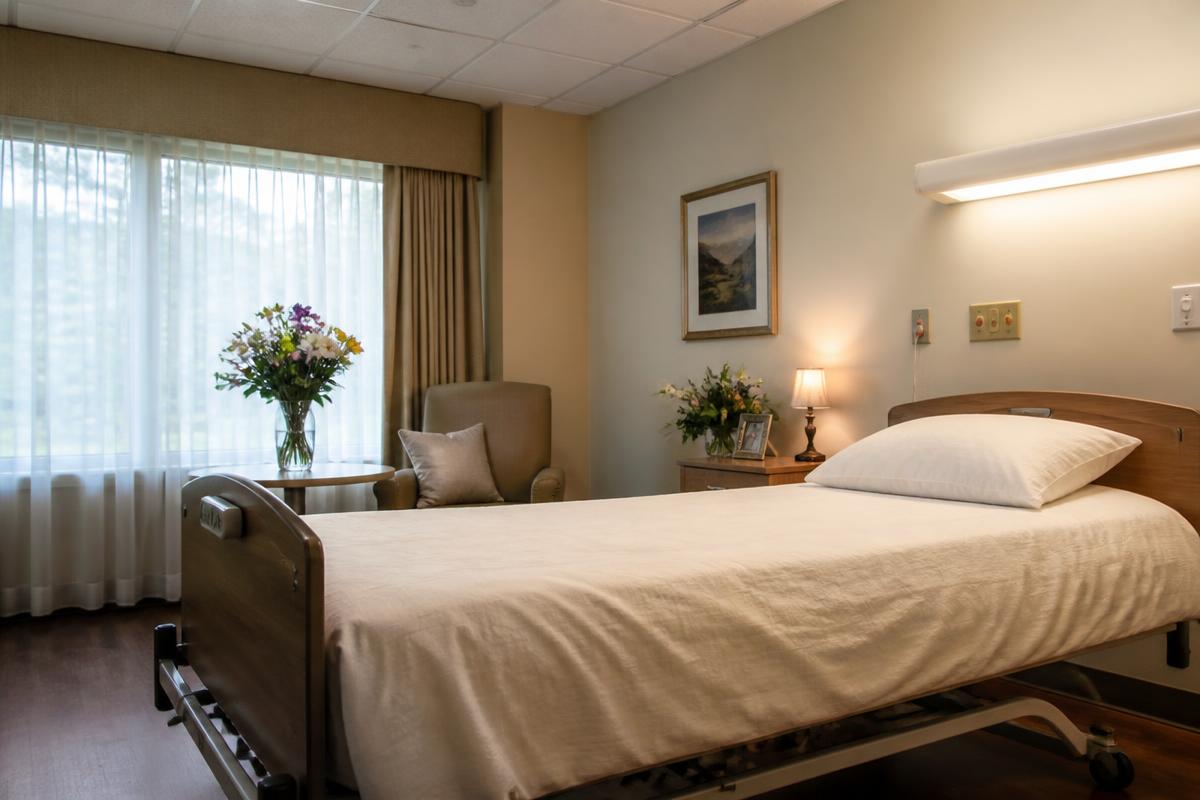
What laundry looks like here
Automation here is not about scale. It is about making sure the linen closet is never the reason a nurse or PSW leaves a bedside.
- Typical size
- 8–30 beds
- Linen intensity
- High per bed, frequent same-day changes
- Primary risk
- Staff pulled away from bedside for support tasks
- Who owns it
- Clinical manager, often without dedicated laundry staff
Where your team hands off, and where Zleni picks up.
- Throughout the dayYour team
Frequent changes at the bedside
Comfort care means linen and clothing changes at unpredictable times. Care staff handle soiled linen exactly as your policy specifies.
- As loads fillYour team
Wash on the existing machines
Small-setting laundry rooms, same cycles, same chemistry — no new equipment in the building.
- Low-traffic windowsZleni
Zleni folds quietly in the background
Processing is scheduled into quiet windows so the residence stays calm for residents and visiting families.
- ContinuousZleni
Family-room and overnight linen included
Linen for families staying over runs in the same queue rather than competing for a caregiver's hour.
- ContinuousZleni
Personal and donated items flagged
Non-standard items families bring in are set aside for staff handling instead of processed blind.
- AlwaysZleni
Closets stay stocked where staff reach
Clean linen is staged at the point of use, so a comfort measure is never delayed by an empty shelf.
The four places hospice care laundry actually breaks down.
A nurse leaves the bedside to do laundry
Today
In a small hospice with no dedicated laundry role, clinical hours quietly become folding hours.
With Zleni
The folding and sorting block disappears from the clinical shift entirely.
Volunteer coverage is unpredictable
Today
Whether laundry is caught up depends on whether volunteers showed up this week.
With Zleni
The service level is the same whether or not volunteer coverage materialised.
High per-bed linen intensity in a tiny building
Today
A handful of beds can generate a surprising volume, with no headcount to absorb it.
With Zleni
Volume is absorbed by runtime rather than by adding a role a hospice budget cannot carry.
Noise and disruption in a quiet setting
Today
Support tasks happen whenever someone is free, including during family visits and vigils.
With Zleni
Processing runs during designated low-traffic windows to preserve the atmosphere.
What it plugs into
Nothing in your building has to change to make room for Zleni.
- Small on-site laundry rooms and existing machines
- Your infection-control practice, adapted for a setting without a laundry department
- Family and overnight-guest linen alongside resident linen
- Volunteer and casual support schedules, without depending on them
- Point-of-use linen closets and staging locations
What operators watch
The numbers this setting already reports on, and how automation moves them.
- Clinical hours at the bedside
- Hours previously spent folding return to residents and families.
- Linen availability at point of use
- Comfort measures are not delayed by an empty closet.
- Dependence on volunteer coverage
- Laundry service holds even in weeks when volunteers do not.
- Monthly operating cost
- One predictable subscription in a tight, often donor-supported budget.
The same team, spending the day differently.
PSW / hospice aide
Personal care stops being interrupted by a laundry backlog.
Nurse
Clean linen is where it should be, so care is not paused to find it.
Clinical manager
Runs laundry as a background service instead of a daily assignment.
Families
A calm environment and staff who are present rather than task-bound.

Why operators here choose Zleni
- Keeps clinical and personal care staff at the bedside.
- Runs during low-traffic windows to preserve a quiet environment.
- Handles high per-bed linen intensity without added headcount.
- Predictable flat cost in a setting with tight, often donor-supported budgets.
Questions we get from hospice care operators
Is a hospice too small to justify this?
Small settings often benefit most, because there is no dedicated laundry role and the hours come directly out of clinical time. We size pilots accordingly.
Will it be noisy?
Scheduling targets low-traffic windows, and the unit is designed for continuous, low-disruption operation in an occupied building.
Can it handle family and donated linens?
Standard items yes. Non-standard items are flagged to staff rather than processed automatically.
See if a pilot fits your community.
No capex. One flat subscription. No maintenance burden either.
Request a pilot