
Resident clothing, back in the right room, every single day.
In Ontario long-term care, personal laundry is one of the most complaint-generating services in the building. A missing cardigan becomes a family call, a family call becomes a documented concern, and a documented concern becomes a compliance conversation.
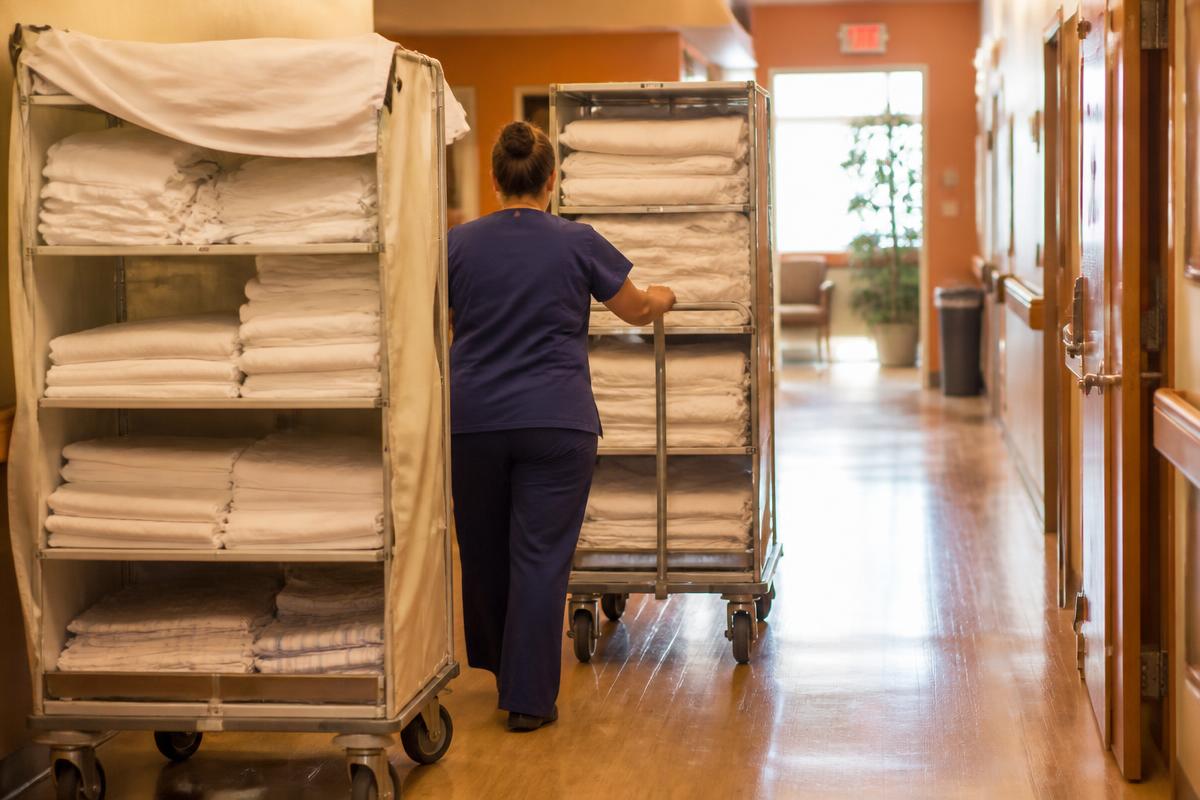
What laundry looks like here
The work itself is not complex — it is sorting, folding and matching at volume, hundreds of items per day, with the resident's name on every one. That is precisely the kind of repetitive, high-accuracy task automation is good at and human schedules are bad at.
- Typical home size
- 96–256 beds across multiple resident home areas
- Dominant workload
- Personal clothing, sorted by resident
- Primary risk
- Lost or misrouted resident clothing
- Who owns it
- Environmental services / laundry lead
Where your team hands off, and where Zleni picks up.
- Early morningYour team
Collection runs home area by home area
Aides collect personal clothing and bed linen on the existing route and schedule for each resident home area. Nothing about intake changes.
- MorningYour team
Wash on your machines and cycles
Same equipment, same chemistry, same separation of personal clothing from flat linen.
- ContinuousZleni
Zleni folds and matches against your labels
Each garment is folded and grouped against the labelling convention the home already uses — no relabelling project, no new naming system.
- ContinuousZleni
Unlabelled items go to a review bin
Anything without a readable label is set aside with a photo record instead of being guessed into the wrong room.
- AfternoonZleni
Output grouped by home area and room
Carts come off the line pre-organised by home area and room number, in the order the delivery route runs.
- Afternoon / eveningYour team
Delivery and closet restock stay with staff
The aide walks a sorted cart instead of sorting on the fly at the closet door.
The four places long-term care laundry actually breaks down.
A resident's clothing goes to the wrong room
Today
A family call, a documented concern, staff time spent searching, and sometimes a replacement purchase.
With Zleni
Sorting is done item by item against the label, and anything ambiguous is escalated to a person rather than routed on a guess.
Agency and casual coverage changes the standard
Today
Fold quality and sorting accuracy swing week to week depending on who is filling the shift.
With Zleni
The folding and sorting standard is identical on a Tuesday day shift and a Sunday agency shift.
Worked hours are consumed by the fold table
Today
Hours funded for resident support are absorbed by repetitive sorting that nobody sees.
With Zleni
Those hours move to delivery, closet organisation and resident-facing time without changing headcount.
Laundry is a standing council item
Today
Concerns are answered with reassurance because there is no record of what happened to an item.
With Zleni
A searchable per-load record lets the home answer a family question with specifics.
What it plugs into
Nothing in your building has to change to make room for Zleni.
- The labelling convention your home already uses
- Existing washers, dryers and laundry-room layout
- Your current collection and delivery routes by resident home area
- Personal clothing and flat linen kept separate as you separate them today
- Your existing infection-control and belongings policies
What operators watch
The numbers this setting already reports on, and how automation moves them.
- Worked hours per resident day
- Hours absorbed by folding and sorting return to the care and service side.
- Personal laundry complaints
- Misroutes drop because ambiguous items are escalated instead of guessed.
- Turnaround by home area
- Each area's clothing comes back on a predictable daily rhythm.
- Agency premium spend
- Laundry coverage gaps stop driving last-minute casual shifts.
The same team, spending the day differently.
Laundry aide
Runs the line and the delivery route instead of standing at a fold table all shift.
Environmental services lead
Gets a daily record of what was processed and what needed review.
PSW on the home area
Receives a cart already sorted by room, so restocking is minutes not an hour.
Administrator and family council
Fewer lost-clothing items, with evidence behind the answer when one is raised.
Why operators here choose Zleni
- Attacks the single biggest source of personal-laundry complaints: misrouting.
- Holds a consistent standard across casual, agency and weekend coverage.
- Frees worked hours toward direct resident care without adding headcount.
- Flat monthly subscription that fits an operating budget, not a capital cycle.
Questions we get from long-term care operators
Do we need to change how we label clothing?
No. Zleni is configured against the labelling convention your home already uses. If items are unlabelled, they are routed to staff rather than guessed at.
Is this a fit for a multi-home operator?
Yes. Most operators start with one home as a pilot, then extend once the sorting accuracy and hours returned are validated on their own numbers.
How does this affect our staffing model?
Pilots are designed around redeploying hours, not eliminating roles. Laundry aides move up the workflow into quality control, delivery and resident-facing service.
See if a pilot fits your community.
No capex. One flat subscription. No maintenance burden either.
Request a pilot